DevotionalIndiaMy TripsOdisha

5 Most Significant Temples in Bhubaneswar, Odisha (2026 Guide)

Getting your Trinity Audio player ready...

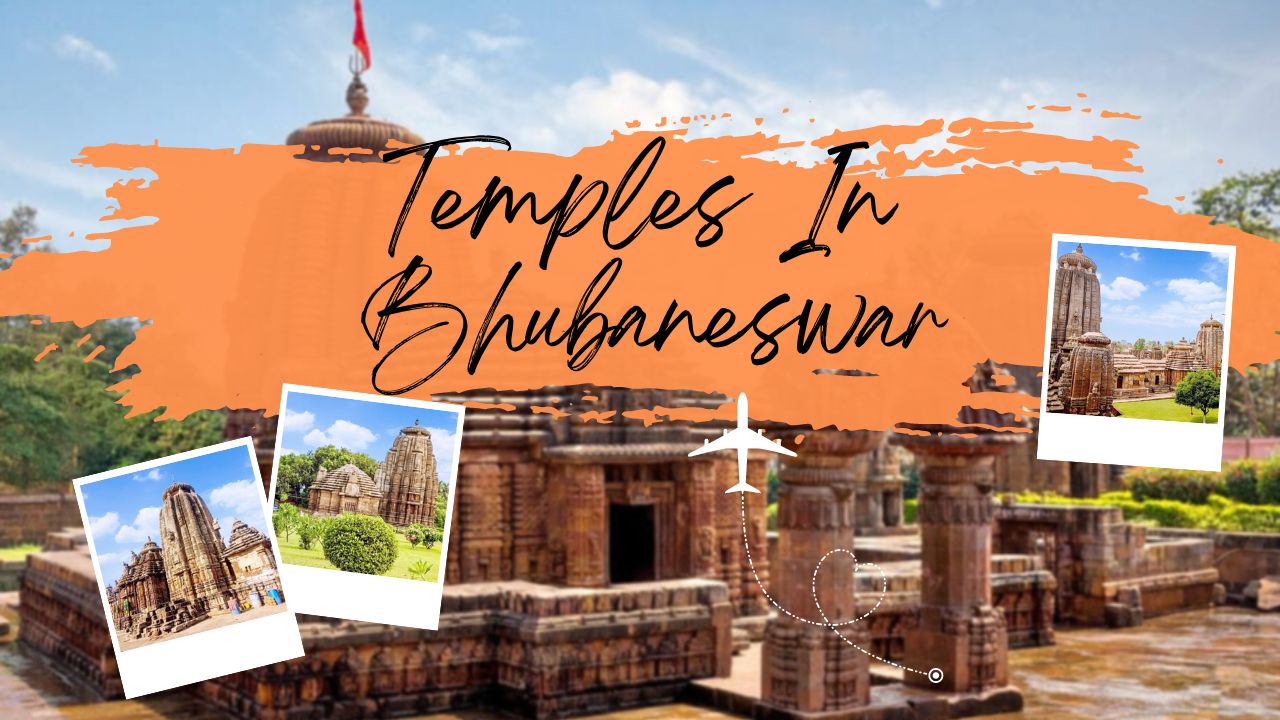
Bhubaneswar, the capital of Odisha, has earned its nickname “Temple City of India” for good reason – the Old Town area, known historically as Ekamra Kshetra, is home to more than 700 shrines built between the 6th and 13th centuries. Together they form one of the most complete records of Kalinga-style temple architecture anywhere in India. Here’s an updated look at the five most significant temples to visit, along with current timings, entry fees, and practical tips for 2026.

Lingaraj Temple
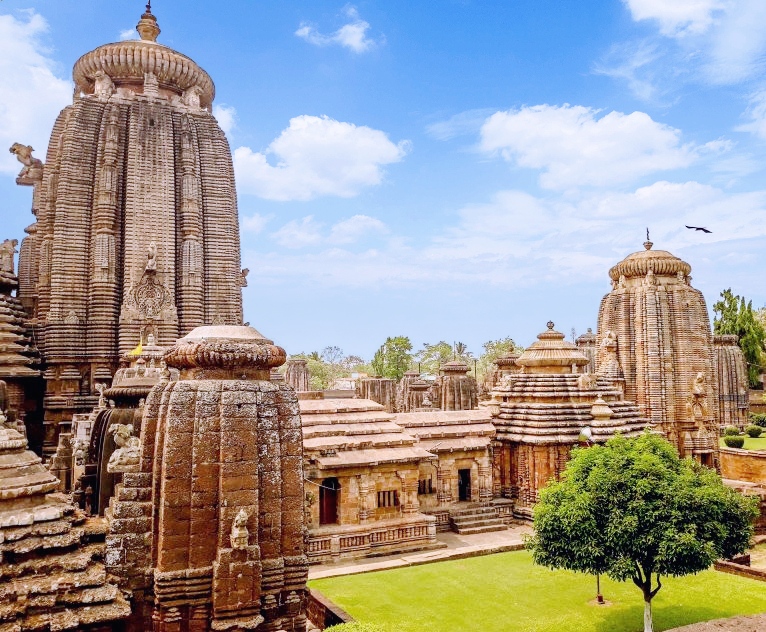
The Lingaraj Temple is the largest and most revered shrine in Bhubaneswar, dedicated to Lord Harihara – a combined form of Shiva and Vishnu. Most of the present structure dates to the 11th century under the Somavamsi dynasty, with later additions made by the Ganga kings. Its curvilinear tower rises to roughly 180 feet, built in the classic Kalinga Deula style, and the complex is organized into four sections – the vimana (sanctum), jagamohana (assembly hall), natamandir (festival hall), and bhoga mandapa (offerings hall) – surrounded by around 50 smaller shrines.

Good to know before you go:

  • The temple is open to Hindus only; non-Hindu visitors can view the complex from a platform built along the outer wall (a legacy of a visit by Lord Curzon).
  • Darshan timings are roughly 6:00 AM–9:00 PM, with a short midday break; entry is free.
  • Maha Shivaratri draws enormous crowds, with extended hours; other major festivals include Ashokashtami and Chandan Yatra.
  • The temple is jointly maintained by the Archaeological Survey of India (ASI) and the Temple Trust Board.

READ ALSO : बैकपैकर के लिए 7 दिन का ओडिशा प्लान – कम बजट में पूरा ओडिशा घूमें (2026 गाइड)

Mukteswara Temple
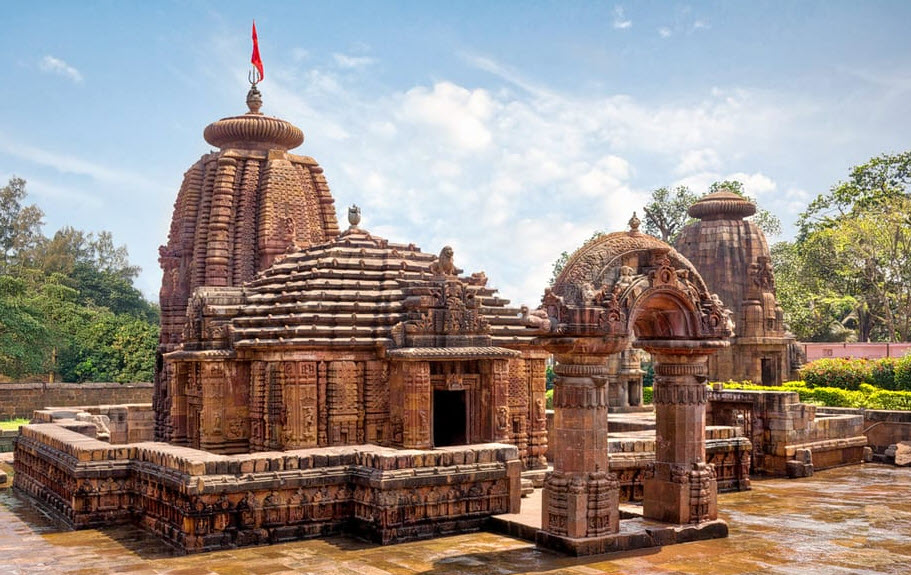
Dating to around 950 CE, the Mukteswara Temple is widely considered the finest example of mature Kalinga architecture and is often called the “gem of Odishan temple art.” It’s dedicated to Lord Shiva and is best known for its ornate torana – an arched gateway carved with figures of Shiva and Parvati – considered one of the earliest and most refined examples of its kind in the region. Unlike Rajarani, it remains an active place of worship.

Good to know: The temple sits within the pedestrian-friendly heritage stretch of Old Town that the city beautified in recent years, making it an easy, pleasant walk from Lingaraj and Rajarani. There’s no entry fee.

चंद्रभागा बीच क्यों है इतना फेमस? – पूरी यात्रा गाइड (2025-2026)

Rajarani Temple
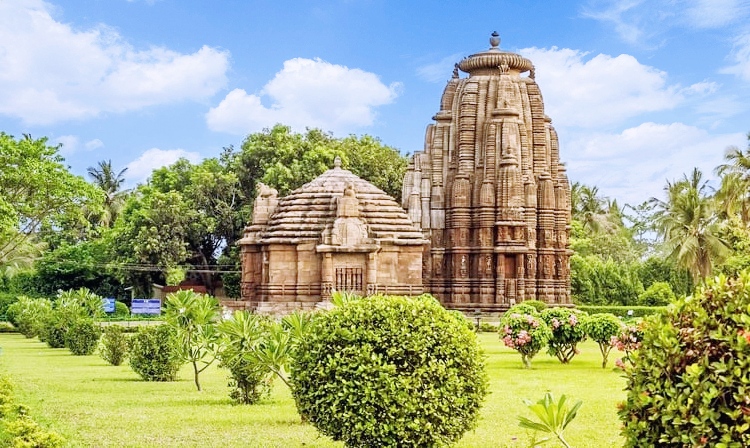
The Rajarani Temple is one of the most photographed monuments in Bhubaneswar, named for the reddish-gold “rajarania” sandstone used to build it – not, as is sometimes claimed, for a presiding king and queen deity. Built in the 11th century, historians place its construction between the Lingaraj and Mukteswara temples, and its tower shows a distinctive blend of Kalinga and central Indian (Khajuraho-style) influences, with rows of miniature turrets and sculpted figures in graceful poses.

Importantly, Rajarani has no presiding deity today – it was likely originally dedicated to Shiva (it was once known as the Indreswara temple) – and it is no longer used for active worship, which makes it a calmer, more garden-like site to explore than the city’s living temples.

Good to know before you go:

  • Managed by the ASI; entry is ticketed at roughly ₹25–30 for Indian nationals and ₹250 for foreign visitors (children under 15 enter free).
  • Open daily, roughly 6:00 AM–9:00 PM.
  • The Odisha Tourism Department hosts the Rajarani Music Festival here every January–February, an atmospheric evening of classical music set against the floodlit temple.

Ananta Vasudeva Temple
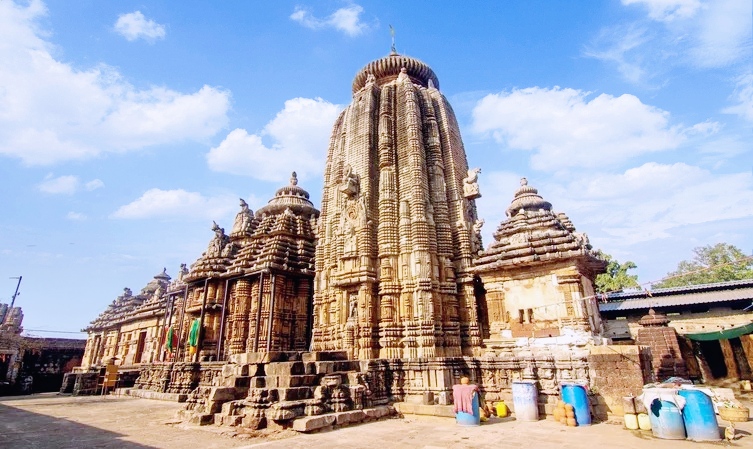
Built in 1278 CE by Queen Chandrika Devi of the Eastern Ganga dynasty, the Ananta Vasudeva Temple is one of the few major Vaishnavite shrines in a city otherwise dominated by Shiva temples. It’s dedicated to Krishna (worshipped here as Vasudeva) alongside Balarama and Subhadra, with black granite images unlike the wooden deities at Puri’s Jagannath Temple. The temple stands right on the edge of Bindu Sarovar tank, next to Lingaraj.

A highlight for visitors is its temple kitchen, which still prepares Mahaprasad (Abhada) in earthen pots over firewood, served at the adjoining Bhoga Bazaar in a tradition modeled on Puri’s Ananda Bazaar.

Good to know: Free entry; open roughly 6:00/6:30 AM–7:00/8:00 PM daily. Foreigners are welcome, unlike at Lingaraj. Janmashtami is the biggest festival here.

Parashurameswara Temple
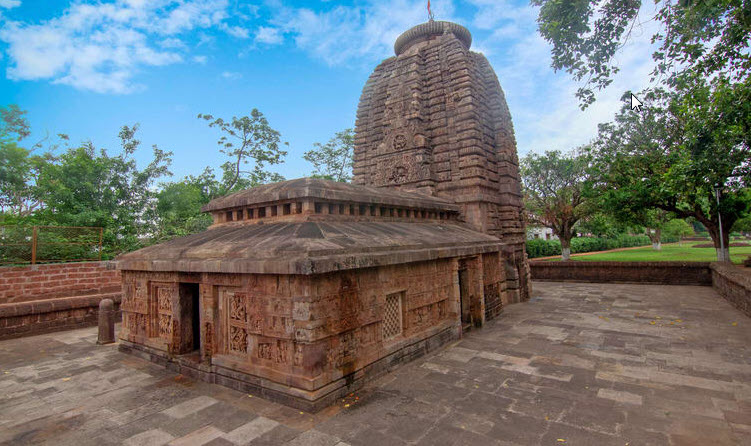
Believed to be one of the oldest surviving temples in Bhubaneswar, the Parashurameswara Temple dates to around the 7th century and is dedicated to Lord Shiva. Though modest in scale compared to Lingaraj, it’s architecturally significant as an early, largely intact example of Kalinga temple design, with detailed carvings of Shiva, Parvati, and various deities on its walls, along with a notable frieze of elephants and other figures on its outer walls.

Good to know: No entry fee; open roughly 5:00 AM–6:00 PM daily. It’s a short walk from Mukteswara and Ananta Vasudeva, making it easy to combine all three on foot.

चंद्रभागा बीच क्यों है इतना फेमस? – पूरी यात्रा गाइड (2025-2026)

Planning Your Visit

All five temples sit within a compact stretch of Old Town, so it’s entirely possible to cover them on foot or by short auto-rickshaw hops in half a day. A few practical notes for 2026 travelers:

  • Best time to visit: October to February, when cooler mornings and evenings make walking between temples and standing for darshan far more comfortable. May–June brings intense heat, and the July–September monsoon can make some stone courtyards slippery.
  • Dress code: Modest clothing covering shoulders and knees is expected at all these sites; footwear must be removed before entering temple premises.
  • Guided heritage walks: The Bhubaneswar Development Authority, along with Odisha Tourism, runs free guided Ekamra Heritage Walks through the Old Town temple cluster, covering Mukteswara, Lingaraj, Parashurameswara, Ananta Vasudeva, and several smaller shrines like Kotitirtheswar and Vaitala Deula – a good option if you want context beyond what’s posted on-site.
  • Getting there: Biju Patnaik International Airport and Bhubaneswar Railway Station are both roughly 3–5 km from the Old Town temple cluster, with taxis and autos easily available.

Conclusion

Bhubaneswar’s temples are far more than static monuments – several, like Lingaraj, Mukteswara, and Ananta Vasudeva, remain living centers of daily worship, while others, like Rajarani, survive purely as architectural masterpieces. Together they trace roughly six centuries of Kalinga temple-building, making the Old Town one of the richest, most walkable heritage clusters in India. Whether you’re drawn by devotion, architecture, or history, a day spent moving between these five temples is one of the best ways to understand why Bhubaneswar earned its title as the Temple City of India.

Devesh Chauhan

I’m Devesh Chauhan, a travel writer, explorer, and the founder of MainAwara. For me, travelling is not just about visiting a destination - it is about experiencing the journey, discovering places beyond the usual tourist trail, meeting people, understanding local culture, and collecting stories along the way. Based in Ahmedabad, Gujarat, I combine my love for travel with my passion for long-distance motorcycle journeys. Over the years, I have explored destinations across India by road, on motorcycle, and through independent trips. These journeys have taken me from the beaches and temples of Odisha and Gujarat to the deserts and landscapes of Kutch, the historic cities of Rajasthan and Uttar Pradesh, the mountains of Himachal Pradesh, and the spiritual destinations of Madhya Pradesh and Uttar Pradesh. One of my memorable journeys was a solo motorcycle ride from Ahmedabad to Jagannath Puri, Odisha, covering a long-distance route across multiple states. I have also ridden through several memorable circuits, including Ahmedabad–Bhavnagar–Diu–Somnath–Dwarka–Jamnagar–Rajkot–Ahmedabad, and the Kutch circuit covering Dholavira, Nara Narayan Sarovar, Koteshwar, Bhuj and Ahmedabad. My road journeys have also taken me from Ahmedabad to Agra and Mathura, travelling through Udaipur, Chittorgarh, Kishangarh, Jaipur, Dausa and Bharatpur. Closer to home, I have explored destinations such as Polo Forest, Idar and Saputara. Beyond Gujarat and Rajasthan, I have explored the Spiti Valley circuit in Himachal Pradesh, destinations across Maharashtra including Nashik and Sambhaji Nagar, and the Andaman & Nicobar Islands. My travels in North and Central India include places such as Kashi Vishwanath in Uttar Pradesh, Ujjain, Omkareshwar, Gwalior and Indore, along with several nearby destinations. What I Share on MainAwara Through MainAwara, I share firsthand travel experiences, detailed travel guides, road-trip itineraries, destination guides, travel tips, things to do, places to visit, and practical information that can help other travellers plan their journeys. I particularly enjoy writing about road trips, motorcycle journeys, mountains, beaches, spirituality, adventure, offbeat destinations and Indian culture. My aim is to combine personal experience with practical information so that readers can understand not only where to go, but also how to get there, what to expect, and what makes a place worth visiting. I believe travel information is most useful when it comes from experience. That is why I try to share the details I discover during my own journeys—from road conditions and routes to places worth stopping at, local experiences, viewpoints, food, accommodation and things I wish I had known before the trip. Beyond Travel When I’m not travelling or writing, I work in the IT industry. I also enjoy swimming and playing volleyball. I have contributed to platforms such as Wikipedia and Tripoto, sharing information and experiences related to the places I explore. The Story Behind MainAwara MainAwara is my space to document the journeys, places and experiences that inspire me. Whether it is a long motorcycle ride across India, a road disappearing into the mountains, an ancient temple, a quiet beach, a remote village, or an unexpected experience on the road, I believe every journey has a story worth sharing. So, if you are planning your next road trip, looking for an offbeat destination, or simply love exploring India— Welcome to MainAwara. Explore more. Travel farther. Stay Awara.I’m Devesh Chauhan, a travel writer, explorer, and the founder of MainAwara. For me, travelling is not just about visiting a destination—it is about experiencing the journey, discovering places beyond the usual tourist trail, meeting people, understanding local culture, and collecting stories along the way. Based in Ahmedabad, Gujarat, I combine my love for travel with my passion for long-distance motorcycle journeys. Over the years, I have explored destinations across India by road, on motorcycle, and through independent trips. These journeys have taken me from the beaches and temples of Odisha and Gujarat to the deserts and landscapes of Kutch, the historic cities of Rajasthan and Uttar Pradesh, the mountains of Himachal Pradesh, and the spiritual destinations of Madhya Pradesh and Uttar Pradesh. One of my memorable journeys was a solo motorcycle ride from Ahmedabad to Jagannath Puri, Odisha, covering a long-distance route across multiple states. I have also ridden through several memorable circuits, including Ahmedabad–Bhavnagar–Diu–Somnath–Dwarka–Jamnagar–Rajkot–Ahmedabad, and the Kutch circuit covering Dholavira, Nara Narayan Sarovar, Koteshwar, Bhuj and Ahmedabad. My road journeys have also taken me from Ahmedabad to Agra and Mathura, travelling through Udaipur, Chittorgarh, Kishangarh, Jaipur, Dausa and Bharatpur. Closer to home, I have explored destinations such as Polo Forest, Idar and Saputara. Beyond Gujarat and Rajasthan, I have explored the Spiti Valley circuit in Himachal Pradesh, destinations across Maharashtra including Nashik and Sambhaji Nagar, and the Andaman & Nicobar Islands. My travels in North and Central India include places such as Kashi Vishwanath in Uttar Pradesh, Ujjain, Omkareshwar, Gwalior and Indore, along with several nearby destinations. What I Share on MainAwara Through MainAwara, I share firsthand travel experiences, detailed travel guides, road-trip itineraries, destination guides, travel tips, things to do, places to visit, and practical information that can help other travellers plan their journeys. I particularly enjoy writing about road trips, motorcycle journeys, mountains, beaches, spirituality, adventure, offbeat destinations and Indian culture. My aim is to combine personal experience with practical information so that readers can understand not only where to go, but also how to get there, what to expect, and what makes a place worth visiting. I believe travel information is most useful when it comes from experience. That is why I try to share the details I discover during my own journeys—from road conditions and routes to places worth stopping at, local experiences, viewpoints, food, accommodation and things I wish I had known before the trip. Beyond Travel When I’m not travelling or writing, I work in the IT industry. I also enjoy swimming and playing volleyball. I have contributed to platforms such as Wikipedia and Tripoto, sharing information and experiences related to the places I explore. The Story Behind MainAwara MainAwara is my space to document the journeys, places and experiences that inspire me. Whether it is a long motorcycle ride across India, a road disappearing into the mountains, an ancient temple, a quiet beach, a remote village, or an unexpected experience on the road, I believe every journey has a story worth sharing. So, if you are planning your next road trip, looking for an offbeat destination, or simply love exploring India— Welcome to MainAwara. Explore more. Travel farther. Stay Awara.

Related Articles

Back to top button