Epic Bike Adventure: Riding to Nal Sarovar Bird Sanctuary from Ahmedabad

|
Getting your Trinity Audio player ready...
|
Nestled in the heart of Gujarat, just about 62 kilometers west of the bustling city of Ahmedabad, lies Nal Sarovar Bird Sanctuary—a shimmering wetland oasis that’s nothing short of a feathered wonderland. Spanning over 120 square kilometers, this Ramsar site (designated in 2012) is Asia’s largest waterbird habitat, drawing in over 250 species of migratory and resident birds each winter.
For me, a die-hard adventure seeker and nature aficionado, there’s no better way to soak in its raw, untamed beauty than on two wheels. A bike trip from Ahmedabad to Nal Sarovar isn’t just a ride; it’s a soul-stirring escape that blends the thrill of the open road with the serene symphony of wings and water.
If you’re craving a break from the urban grind, this journey promises crisp winds, stunning avian spectacles, and moments of pure tranquility. In this revamped recount of my unforgettable escapade, I’ll dive deep into every twist, turn, and tweet of the trip— from pre-dawn preparations to sunset-fueled reflections. Whether you’re a birdwatching newbie or a seasoned rider, buckle up; this is your ultimate guide to conquering Nal Sarovar on a bike.
Pro Tip: Check out my other avian adventures, like Discovering the Beauty of Thol Bird Sanctuary in Ahmedabad, for more feathery inspiration. Or fuel your wanderlust with the Ultimate Guide to Bike Trips in Gujarat 2026, packed with epic routes just like this one.
Dawn Departure: Gearing Up for the Ride
My alarm blared at 5:00 AM on a crisp winter morning in Ahmedabad the kind where the air nips at your skin but promises warmth by noon. As a techie by day and wanderer by heart, these early starts are my ritual for reclaiming the wild. Living in the satellite neighborhood of Ahmedabad, I had the luxury of a short hop to the city’s outskirts, but the real magic began once I hit the highway.
I rolled out my trusty Bajaj Avenger 220 a beast of a cruiser that’s equal parts comfort and adrenaline. Before firing up the engine, I ran through my mental checklist: a full tank of petrol (topped up the night before to avoid any pit stops), a sturdy helmet with a visor to shield against the dust devils, riding gloves for grip, and layered clothing to combat the morning chill. Essentials packed into my saddlebags included a generous squirt of high-SPF sunscreen (Gujarat’s sun doesn’t mess around), a couple of insulated water bottles (hydration is non-negotiable on a bike), energy-packed snacks like nuts and protein bars, and my trusty DSLR camera slung over my shoulder, lenses cleaned and ready for action.
With a final glance at my phone’s GPS plotting the most scenic route via NH47 and the Sanand-Bavla road I twisted the throttle. The engine’s low growl echoed through the sleepy streets as I merged onto the highway. The first 20 kilometers flew by in a blur of sodium-lit flyovers and awakening chai stalls, but soon the cityscape gave way to golden fields of mustard swaying like waves in the breeze. The road to Nal Sarovar is a rider’s dream: smoothly paved, mostly straight with gentle curves that invite you to lean in, and flanked by rural vignettes villagers tending to cattle, roadside dhabas belching aromatic smoke from fresh parathas, and the occasional camel caravan plodding along like relics from another era.
The ride clocked in at exactly 1 hour and 45 minutes, covering those 62 kilometers at a leisurely 40-50 km/h to savor the scenery. No traffic snarls, no toll booths just pure, unadulterated freedom. By the time the sanctuary’s signage loomed ahead, the sun had crested the horizon, painting the sky in hues of saffron and rose. My heart raced; the real adventure was about to unfold.
Arrival at the Avian Eden: First Impressions and Entry
Pulling into the modest parking lot at Nal Sarovar’s main gate felt like stepping into a living postcard. The air hummed with anticipation, laced with the faint, earthy scent of wetlands. A smattering of other visitors fellow birders with binoculars at the ready, families on weekend jaunts milled about, but the vastness of the place ensured it never felt crowded. I locked my bike with a heavy chain (a habit from city rides) and ambled to the ticket counter, a simple booth shaded by neem trees.
Entry was a steal, especially on a weekday: 75 INR for Indians, though weekends bump it to 85 INR. Foreigners pay a premium $10 USD midweek, $12.50 on weekends but it’s worth every penny for the immersion. Snapping a quick permit for my camera (200 INR for Indians, $20 USD for others), I stepped through the gate. And that’s when it hit me: the chorus. A cacophony of chirps, calls, and trills erupted from the reeds, like nature’s own orchestra tuning up. It was an instant mood-lifter, washing away any lingering road fatigue.
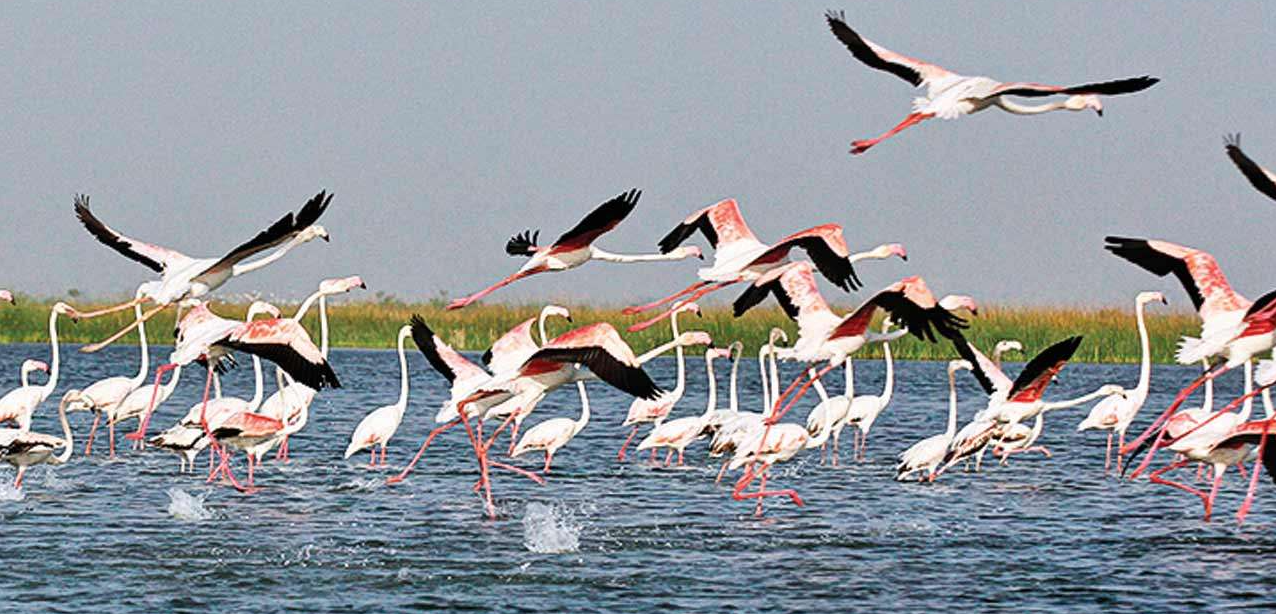
Nal Sarovar isn’t just a lake; it’s a shallow brackish expanse fed by seasonal monsoons and the nearby Gulf of Cambay, creating a mosaic of marshes, islands, and scrublands. In winter (November to March, the undisputed best time to visit), it transforms into a migratory hotspot, with over a million birds flocking here from as far as Siberia and Central Asia. I could already spot silhouettes against the water elegant sarus cranes strutting like royalty, squat pelicans gliding low, and the cotton-candy pink of greater flamingos dotting the horizon.

Into the Heart of the Sanctuary: Boat Ride and Birdwatching Bliss
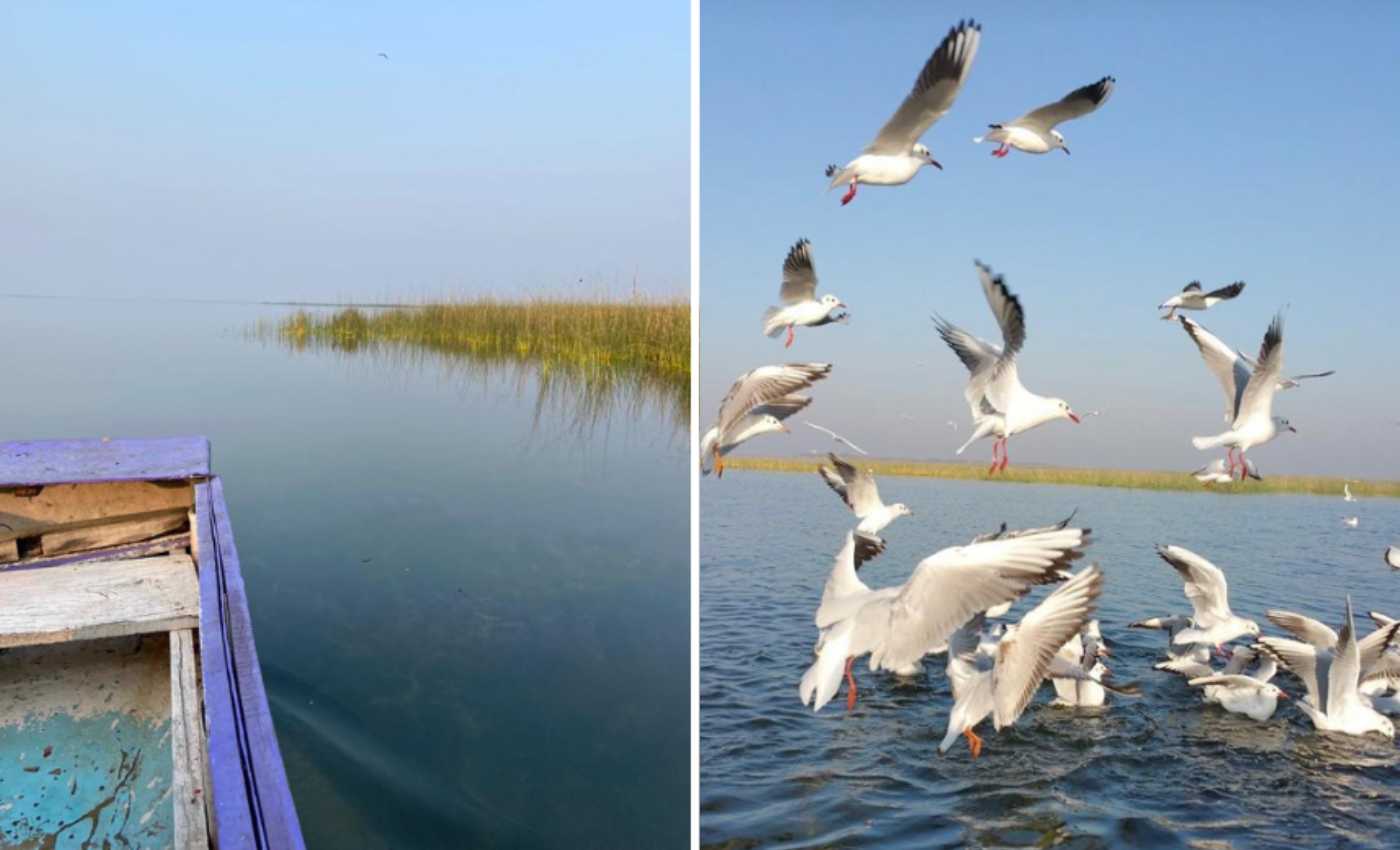
No trip to Nal Sarovar is complete without a boat ride, and I wasted no time hiring one from the jetty. For around 500-600 INR per hour (bargain hard; it’s negotiable), a sturdy motorized boat awaits, captained by a local Gujarati fisherman whose weathered face tells tales of decades on these waters. As we chugged away from shore, the world shrank to ripples and reeds. The boat sliced through the glassy surface, sending tiny fish scattering like silver confetti.
Our skipper, Ramesh bhai, was a font of knowledge a self-taught ornithologist who’d named half the birds after his grandkids. He pointed out nesting colonies on reed-fringed islets: the comical head-bobbing of pied avocets, the majestic wingspans of painted storks mid-forage, and rafts of northern pintails dabbled in synchronized feeding. But the stars? The flamingos. Thousands of them, their legs like flaming matchsticks against the blue, filtered the brine for algae in a hypnotic ballet. Up close, their calls a mix of honks and grunts added a quirky soundtrack to the serenity.
The breeze whispered secrets through the boat’s canvas canopy, carrying the salty tang of the lake mingled with wild grasses. We paused at a quiet cove where a family of sarus cranes the world’s tallest flying bird performed an impromptu courtship dance, their red heads glowing in the sunlight. I fired off shots until my camera’s memory card begged for mercy, each frame capturing not just feathers, but the pulse of life unbound. If you’re into photography, pack a telephoto lens; the birds are shy but the light is forgiving.
After an hour on the water, we docked, my senses buzzing. The boat ride isn’t just sightseeing it’s meditative, a chance to unplug and let the rhythm of oars (or props) realign your spirit.
Trails and Tastes: Nature Walk and Local Flavors
Eager for terra firma, I laced up my boots for a guided nature trail free with entry, though tips are appreciated for the eco-guides. These paths wind through acacia groves and prosopis thickets, a stark contrast to the watery core. The underfoot crunch of dry leaves mingled with the rustle of unseen creatures: skittish hares darting into bushes, iridescent dragonflies patrolling the air, and the occasional monitor lizard sunning on a log. Floral highlights included clusters of wild oleander in defiant bloom and the spiky sentinels of cactus, guardians of this arid fringe.
The sanctuary’s upkeep is commendable litter bins at every junction, interpretive signboards detailing biodiversity (did you know Nal hosts over 36,000 waterfowl in peak season?), and subtle boardwalks to minimize impact. Midway, I stumbled upon the interpretation center, a modest hub with exhibits on conservation efforts, like anti-poaching patrols and habitat restoration post-monsoon.
Hunger struck around noon, and that’s when the periphery shops shone. Tucked under banyan shades, they hawk Gujarati soul food: steaming theplas stuffed with fenugreek, tangy undhiyu in clay pots, and fresh sugarcane juice squeezed on-site. I devoured a thali for 100 INR, the flavors exploding like fireworks spicy, sweet, and utterly grounding. Souvenirs? Handcrafted bird motifs in terracotta or embroidered scarves from local artisans. It’s a gentle nudge that this isn’t just wilderness; it’s woven into the lives of the fishing communities who call it home.
For a quick visual tease of the trails, peek at this YouTube Short from my ride—pure, unfiltered vibes. If you’re planning more urban explorations before hitting the road, don’t miss Seeing the Best of Ahmedabad in Just 24 Hours.
Golden Hour Goodbye: The Ride Home
As the sun dipped toward the horizon around 5:30 PM, casting a gilded glow over the lake, I knew it was time to rev up.
The return leg mirrored the outbound thrill but with a twilight twist: cooler air nipping at exposed skin, fireflies flickering like errant stars along the verges, and that epic sunset flames licking the clouds, reflecting off roadside ponds like spilled mercury. I pushed the Avenger a tad harder, the engine’s hum syncing with my contented sighs.
Traffic was lighter still, the highway now a ribbon of shadow and light. By 7:15 PM, I was back in Ahmedabad’s embrace, muscles pleasantly sore, mind brimming with memories. The total round trip? Under four hours of saddle time, but a lifetime of stories.
Quick Facts: Planning Your Nal Sarovar Bike Quest
- Distance from Ahmedabad: 62 km (via NH47 and Bavla Road Google Maps’ friendliest route).
- Travel Time: 1 hour 45 minutes one way (add buffer for photo stops).
- Best Time to Visit: November to March (migratory peak; summers are scorching, monsoons flood-prone).
Top Things to Do:
- Boat safaris for intimate bird views.
- Photography hunts at dawn/dusk for golden-hour magic.
- Savoring authentic Gujarati cuisine and cultural chats with locals.
- Guided birdwatching walks to spot rarities like the Dalmatian pelican.
Entry Fees, Boating, and Camera Charges (as of 2025)
| Category | Monday-Friday | Saturday-Sunday |
|---|---|---|
| Indians (Entry) | ₹75/person | ₹85/person |
| Foreigners (Entry) | $10 USD/person | $12.50 USD/person |
| Camera (Indians) | ₹200/camera | ₹200/camera |
| Camera (Foreigners) | $20 USD/camera | $20 USD/camera |
Boating: ₹500-700/hour for 4-6 people (shared or private; haggle!). Bikes park free, but helmets off during rides.
Pack binoculars, insect repellent, and modest attire (it’s a protected area). Weekdays are quieter; weekends buzz with picnickers.
Final Feathers: Why Nal Sarovar Steals Your Heart
This bike odyssey to Nal Sarovar wasn’t merely a day out—it was a reminder of why I chase horizons. In an era of screens and schedules, trading exhaust fumes for egret calls feels revolutionary. The sanctuary’s fragile beauty, sustained by community-led conservation, urges us to tread lightly and leave inspired. If birds stir your soul or the road calls your name, make this trip your next chapter. Ahmedabad’s gateway to Gujarat’s wild side awaits—throttle on, and let the wings carry you home.
Craving more two-wheeled tales? Dive into my Ultimate Guide to Bike Trips in Gujarat 2026, packed with routes, gear hacks, and offbeat gems. For longer hauls, check out my 1300 Km Bike Adventure: Ahmedabad, Bhavnagar, Diu, Somnath, Dwarka, and Back.
Safe rides and happy spotting!